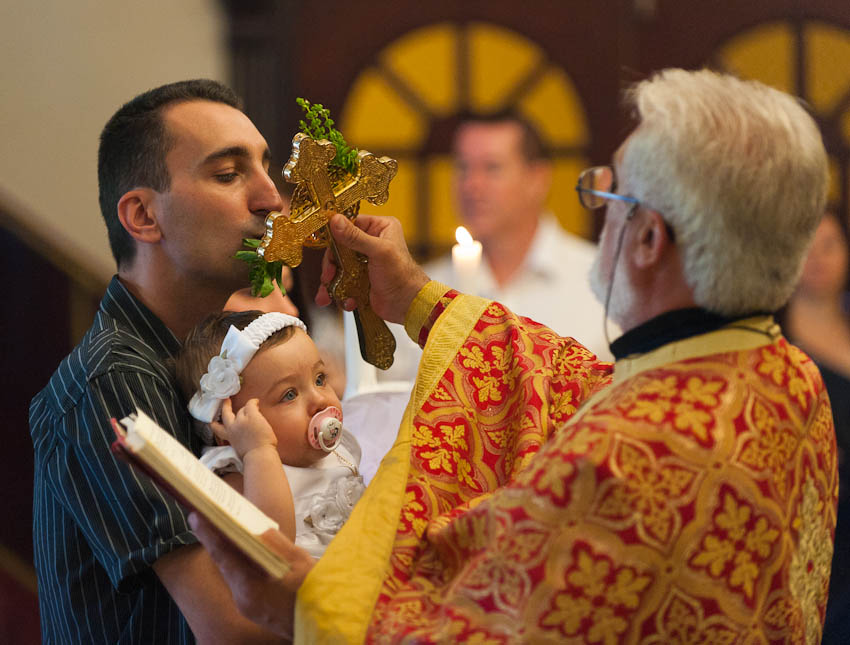
I want to enter the 2011 Olive Cotton Photography Prize so have been thinking about what elements are needed to make a portrait great. I have sought to understand why I resent images of Cate Blanchett being entered into photography competitions.
Element one - dialogue
Oscar Wilde wrote "Every portrait that is painted with feeling is a portrait of the artist, not of the sitter" and this is equally applied to photography. Simply put, what you choose to express about your subject is what can be compelling in photographic portraiture and this leads to the interesting puzzle of finding out what there is that is worthy of expression and in what circumstances that expression can be revealed. A way of solving part of the puzzle is to consider the face as an inert and dull object, accepting that it is the complexity of expression and not the face itself that creates the dialogue between the photographer and the portrait sitter and the more the expression says about the human condition, the more it is a compelling portrait (Rembrandt's self-portraits come to mind).
In the photo below, there is a strong dialogue; it feels like there is a connection between the photographer and the sitter and the emotion expressed is deep.
Element two - Context
A portrait without environmental cues, whether they stem from the background (e.g. buildings) or the sitter (e.g. clothes, hands, jewellery) is unlikely to be as compelling as the same portrait with them. Ricahrd Avedon's portraits of vagrants in Nevada are strong images but in my view had they not being photographed in a white light tent they would have had that much more power because they would have allowed the viewer to reconcile the context of the images with the sittter. The above portrait, in my view, fails to provide any context and this lack of knowing where this portrait was taken makes it less effective.
In the image, below, the building behind the subject adds value, if only because it then makes the viewer puzzle about the context. Another way of thinking about context is to consider how different the image would have been had the background been a beach.
This portrait also provides additional context by showing the girl's hands and paradoxically, the lack of jewellery, makeup and costume provides additional information about the subject. However, in my view, the portrait fails as there is little dialogue; the subject's face is almost inert and in its inertness it reveals little about the human condition.
In the photo below, think of how the observers in the photo enhance the mood. They provide context and in doing so, emphasise the sitter's plight.
Element three - light
Light is too beautiful a medium to ignore especially given its ability to emphasise elements within an image such as mood and ambiguity. Bill Henson comes to mind when using light; its presence or absence can make a portrait more interesting.
In the image below, the theatrical gestures of the man are enhanced by the 'stage' lighting (which happened to be late afternoon sunlight).
Using a third image of the same man, the lighting in this instance is bland and safe. This is consistent with this type of photo.
Conclusion
Without dialogue, context and lighting, a photo of a person's face can never be a portrait.
Context can be arranged in advance just as lighting can be controlled.
Dialogue is the mystery factor and Cate Blanchett clearly has the ability to create dialogue at will. This skill has made her one of the world's greatest actors but, once you have access to Cate Blanchett, her skill must make her one of the easiest persons to use for your portraits.
In my view, photography portrait competitions should bar the entry of portraits of such actors since their use is akin to cheating, a bit like catching fish in a barrel. My logic is flawed since I don't apply the same logic to lighting (if I were, I would ban the use of artificial lighting insisting on natural light only).
I would like to think I have been positively influenced by Werner Bischof for his quiet humanistic vision and Eve Arnold for her compassion.
About Me
- John Slaytor
- I specialise in photographing moments of tenderness so I tend not to do posed portraiture and instead prefer to work unobtrusively at family gatherings
Sunday, March 13, 2011
Sunday, February 20, 2011
A Macedonian christening from a different angle
A Macedonian christening in Sydney yesterday - while waiting in the church for another christening to finish, I decided to photograph that christening but try different angles.
Tuesday, February 8, 2011
A timeless photo
I photographed a funeral last week.
At the wake, I spoke to the 93 year old mother of the son who had died and learnt about how she had immigrated to Australia from The Netherlands after WWII.
I asked if I could photograph her and she agreed. I asked because the funeral photos were for family in The Netherlands who were unable to attend the funeral so it was very important for them to be able to see her. I also photographed her because I was conscious that this might be the last beautiful photo of her.
I can look at this photo for hours.
At the wake, I spoke to the 93 year old mother of the son who had died and learnt about how she had immigrated to Australia from The Netherlands after WWII.
I asked if I could photograph her and she agreed. I asked because the funeral photos were for family in The Netherlands who were unable to attend the funeral so it was very important for them to be able to see her. I also photographed her because I was conscious that this might be the last beautiful photo of her.
I can look at this photo for hours.
Friday, January 28, 2011
not stopping at the second hurdle
In the pre-digital camera era, purists would rage about never cropping images, somehow believing that the 35mm format was the perfect aspect. These purists would claim that they had framed the perfect image before they clicked the shutter in order to produce an immaculate print.
In the digital era, more images are being taken than ever before and many photographers have adopted this purist approach, unconsciously or otherwise. They look at their images and are disappointed by them. Or maybe they are disappointed by themselves, feeling that as amateur photographers they are incapable of taking outstanding images.
A more positive approach is to regard the image as a rough diamond which needs to be cut and polished in such a way as to maximise its potential. Enhancing images is best be done in Adobe Lightroom; its bigger brother Adobe Photoshop is far too complicated to learn for most photographers.
The photos below demonstrate the polishing of one image. All enhancements were done in Adobe Lightroom under ten minutes.
Sunday, January 16, 2011
Liferals
I have specialised in funeral photography in the Sydney region for the past three years.(http://www.thefuneralphotographer.com.au) I don't fully comprehend why funeral photography is sometimes regarded with incredulity. Part of me thinks it is because our society does everything we can to avoid dealing with death and the last thing our society wants is permanent evidence that it is a part of life; paradoxically our society is perfectly happy to witness other societies' deaths (usually in the form of natural disasters and civil war).
Last month I photographed beyond the grave - the 80th birthday party of a family matriarch who had had a health scare months earlier. Her extended family decided to pull out all the stops for Ismeme's 80th birthday party by making it a retrospective of her life.
Below is a link to the photos of Ismene's birthday.
liferal photos
Ismeme was far from embarrassed at friends flying in from interstate, her grandchildren playing musical instruments, and being able to declare to her family just how important each and every one of them was to her.
Ismene gave a beautiful impromptu speech which is now included in the book and preserved for posterity. A grandson wrote a limerick which is now in the book. The book also captures her relationship with her friends and family and thus says so much more than could a single portrait of her.
It is often said that funerals are for the survivors - the beauty of photographing the person during the 'retrospective' of their life is that the images may also help the survivors in that they capture photos of the survivors with the loved one in a beautiful setting. This is in contrast with photos of the loved one in their final days where they may be in a pain or in a less than ideal environment such as a nursing home.
Paul Hassing is championing 'liferals' which he defines as an "Organised event to celebrate love, friendship and the joy of living "Opposite of funeral.." and it's worthwhile visiting his website to learn more about them. http://www.liferal.com
Last month I photographed beyond the grave - the 80th birthday party of a family matriarch who had had a health scare months earlier. Her extended family decided to pull out all the stops for Ismeme's 80th birthday party by making it a retrospective of her life.
Below is a link to the photos of Ismene's birthday.
liferal photos
Ismeme was far from embarrassed at friends flying in from interstate, her grandchildren playing musical instruments, and being able to declare to her family just how important each and every one of them was to her.
Ismene gave a beautiful impromptu speech which is now included in the book and preserved for posterity. A grandson wrote a limerick which is now in the book. The book also captures her relationship with her friends and family and thus says so much more than could a single portrait of her.
![]() |
| Listening to a grandson's violin recital |
![]() |
| Listening to a granddaughter's piano recital |
![]() |
| Watching her namesake's theatrical performance |
Paul Hassing is championing 'liferals' which he defines as an "Organised event to celebrate love, friendship and the joy of living "Opposite of funeral.." and it's worthwhile visiting his website to learn more about them. http://www.liferal.com
Sunday, January 2, 2011
more musings on portraiture
I think I'll struggle with portraiture for as long as I am a photographer. The extraordinary challenge of capturing the essence of a person. At the moment I am mulling over the term subject - as soon as someone is your subject, they are effectively trapped and/or controlled so there is no chance whatsoever that they will be revealed. How can a prisoner ever be themselves? A slightly extreme analogy but very rarely do I see a revealing portrait in circumstances fully controlled by a photographer.
To some recent images and why I think they work.
Males are generally not good at not doing things so if they are engaged in a task of their own making, they'll reveal themselves. The trick for the photographer is to be ready by anticipating the technical requirements of the image.
The image below, taken at a wedding, succeeded technically because it has frozen the sitter (1/350th of a second), knocked out the background (200 mm, f8.0). The image succeeded aesthetically because of the beautiful contrast between the foreground and background. The image succeeded as a portrait because it is so vivacious.
The portrait may also have succeeded because I had met and chatted to him the day before at the wedding rehearsal in the church.
To some recent images and why I think they work.
Males are generally not good at not doing things so if they are engaged in a task of their own making, they'll reveal themselves. The trick for the photographer is to be ready by anticipating the technical requirements of the image.
The portrait may also have succeeded because I had met and chatted to him the day before at the wedding rehearsal in the church.
And just after the wedding ceremony, I photographed him skylarking and this enabled our rapport to develop, at no stage did I try to control or censure what he did and this may have given him the freedom to play, to be himself.
Sunday, December 26, 2010
National Photographic Portrait Competition entry
My entry into the 2010 National Photographic Portrait Prize run by the National Portrait Gallery in Canberra is one of 55 finalists from more than 1200 entries and is now in the running for the $25,000 prize that will be awarded in February 2011. The exhibition will be displayed at the National Portrait Gallery from 25 February to 17 April 2011 and tour to selected venues throughout 2011.
Like all of my portraiture, this image stems from my philosophy of searching out beauty in everyday life and demonstrating its presence through my photographs. I want people to appreciate that beauty is not reserved for media celebrities since beauty has little to do with the material world.
For me the beauty of the portrait, ‘Young girl in a dance class waiting to be photographed’, stems from the honesty and innocence of the young girl. She is not cloyingly sweet, she has not smiled or performed for the camera and she is not trying to be anyone other than herself. There are no material possessions in the portrait that distract the viewer from appreciating her honesty.
It is no coincidence that I specialise in funeral photography for mourners, being tender, compassionate and thoughtful are too beautiful not to be photographed.
Subscribe to:
Posts (Atom)